
Karma knowledge archive
Is Corporate India Built for a Different Era? Gen Z, Leadership Reset & Workplace Redesign| Pratik Vaidya
Is Gen Z the challenge or is Corporate India facing its biggest leadership reset? Insights from NDTV Profit on fairness, skills, transparency, and retention.
Original publication: 2026-01-16
Workplace Reset • Gen Z • Leadership • Transparency • Skill Growth
Is it about Gen Z or is Corporate India facing its biggest leadership and workplace reset in decades?
India Inc. needs to adapt to Gen Z’s expectations work-life balance, transparency, skill enhancement and fairness or risk high attrition. This generation is willing to move quickly when workplaces do not match their values.
Core shift
Gen Z defines growth as skills, exposure, and meaningful projects not just promotions.
Retention reality
Work-life balance and fairness have become non-negotiables for many Gen Z employees.
Leadership challenge
Organisations must modernise career paths, feedback systems and decision-making structures.
Key arguments highlighted by NDTV Profit host Vikram Oza
What is changing and why companies are feeling the pressure
Gen Z priorities
Work-life balance is valued as much as salary for a large share of Gen Z. Career growth is increasingly defined as learning new skills rather than only promotions.
Response to stagnation
When growth opportunities and work-life balance are missing, Gen Z is more willing to exit—early and often compared to older cohorts.
Recognition has been redefined
Gen Z wants access meaningful projects, exposure, and visible skill-building—over applause, praise, or symbolic appreciation.
Corporate pushback
Hiring managers often cite readiness gaps, shorter tenures, and perceived under preparedness—signalling a disconnect between employer expectations and Gen Z’s workplace values.
Unique perspectives that stood out
Long hours are acceptable when work is meaningful and contributes to growth.
Fairness and pay transparency have become retention dealbreakers.
Skills and mobility define growth more than titles or promotions.
Stronger mental health awareness increases demand for boundaries and balance.
Questions raised for Corporate India
Two questions every leadership team must answer
Adapting to the future workforce
With AI reshaping roles and generational expectations evolving, how quickly are companies willing to adapt to attract and retain Gen Z talent?
Redesigning career paths
Do companies know how to design modern career paths that provide momentum, skills, and meaningful projects—without relying only on titles and hierarchy?
Actionable advice from the panel
Practical steps companies can implement without waiting for “the perfect time”
Panelists: Sarabjeet Singh (Founder, EZAR) • Pratik Vaidya (CVO & MD, Karma Global) • Sadia Saeed (Founder & Chief Psychologist, Inner Space) • Gopal Sehjpal (Leadership Coach) • Piyush Bagaria (Co-founder, Salary Se)
Provide independent opportunities: give Gen Z ownership of divisions or projects with teams to lead.
Implement feed-forward systems: replace purely retrospective feedback with guidance for next steps.
Monthly performance meetings: discuss expectations, progress, and challenges in a predictable rhythm.
Involve Gen Z in decision-making: include their perspective in upskilling and career-path design discussions.
Exclusive response by Pratik Vaidya, CVO & MD, Karma Global
“Salary may get them in the door. Momentum makes them stay.”
Question on fairness and pay transparency
Are opaque salary bands and slow pay corrections becoming dealbreakers for Gen Z retention—especially when career growth is increasingly tied to upskilling and fairness?
Pratik’s viewpoint
He frames Gen Z as “not allergic to hard work,” but highly sensitive to wasted work. They want skill-building, exposure, and meaningful projects. He notes that many organisations still reward hours and hierarchy—creating a mismatch where retention becomes the cost.
Question on modern career paths
With rising costs and evolving expectations, and with only a small portion expecting to stay long-term, do companies even know how to design modern career paths that retain Gen Z?
Pratik’s response
He emphasises that salary alone does not retain Gen Z. What retains them is momentum—skills, meaningful projects, and managers who invest in their growth. He adds that Gen Z is not the problem; workplace design still running on old organisation charts, titles, and hierarchies needs a complete refurbishment. He also suggests that some may become entrepreneurial leaders, and organisations can explore flexible compensation structures such as variable elements and ESOPs where relevant, but the core “challenge in work” and upskilling matters most.
Snippets highlighted in the discussion
The numbers that explain the reset
1.1 years is the average job tenure in the first 5 years, shorter than other generations
52% in current jobs actively looking for a new role
11% wish to stay in their jobs long term
Gen Z has the highest attrition rate of any generation
45% hold traditional full-time roles
31% want to add a side hustle
50% demand work-life balance as a top priority in job offers besides salary
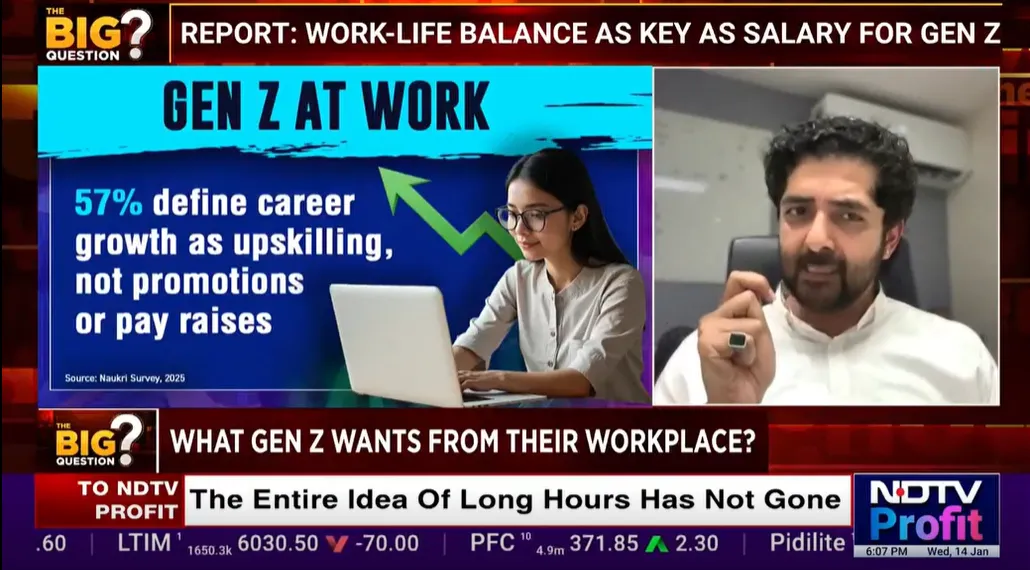
57% define career growth as upskilling, not promotions or pay rises
25% among those with 5 to 8 years’ experience tie real progress to better pay
81% crave recognition via growth opportunities over appreciation
65% value transparency and fairness above all other values
Closing perspective
This is not a “Gen Z problem”. It is a workplace design problem.
The panel’s message is clear: organisations that modernise career paths, make fairness visible, and invest in skill momentum will not only retain Gen Z—they will build stronger leadership pipelines and healthier cultures across generations. The reset is already underway, and the cost of delay will be felt first in attrition, then in capability gaps.
For compliance guidance and implementation support, write to marketing@karmamgmt.com