
Karma knowledge archive
Digital Transformation & New Labour Codes: Challenges and Opportunities for MSMEs in India
Learn how the new labour codes and digital transformation are reshaping MSME compliance in India. Explore key challenges, technology adoption needs, compliance costs, and growth opportunities for small businesses and startups.
Original publication: 2026-02-25
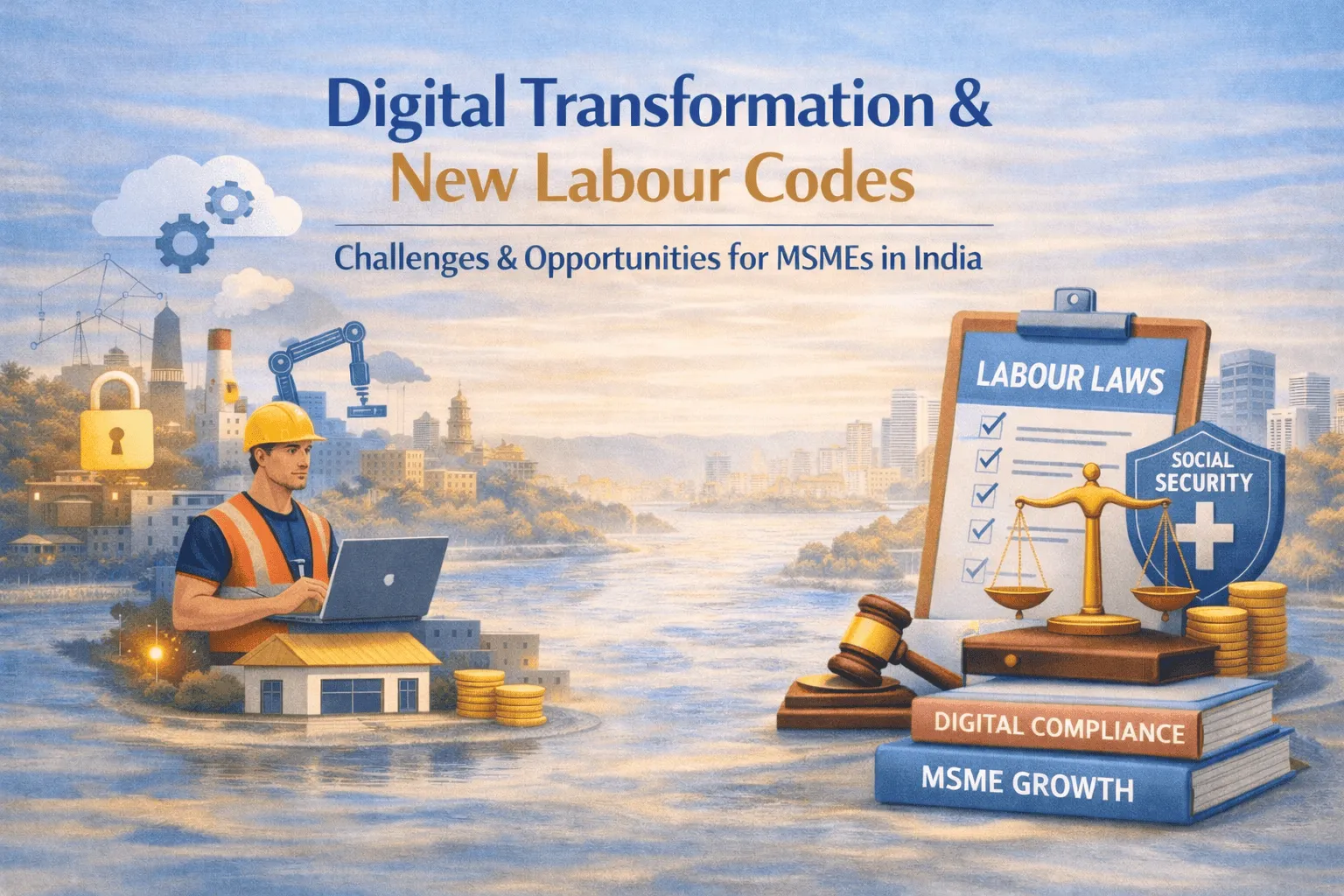
Labour Codes | Digital Transformation | MSME Advisory
Digital Transformation & New Labour Codes: Challenges and Opportunities for MSMEs
The introduction of the new Labour Codes has brought structural changes in compliance requirements, particularly for small businesses and start-ups. Digital filings, unified registrations, and social security obligations for gig and platform workers are reshaping how MSMEs approach regulatory compliance.
Practical takeaway
Awareness, structured adaptation, and professional compliance support are critical for MSMEs transitioning toward digital labour compliance frameworks.
Key Challenges for SMEs Under the New Labour Codes
1.
Transition from minimal or informal compliance structures to digital filings and structured regulatory reporting.
2.
New social security coverage requirements for gig and platform workers.
3.
Difficulty in understanding multi-layered digital compliance processes.
4.
Need for professional labour advisory support for structured implementation.
Technology-Driven Compliance Framework
The new labour codes rely heavily on digital infrastructure including electronic filings, electronic document storage, and online compliance tracking systems. This transition assumes reliable access to technology across industries and geographic regions, which remains a challenge for many small enterprises.
Increased Cost of Compliance for Small Enterprises
Additional statutory responsibilities such as health check-ups, ESIC coverage for hazardous workers, overtime compliance, and provident fund contributions may increase operational costs, particularly for SMEs operating with limited margins.
Implementation vs Practical Challenges
While the new codes aim to balance employer flexibility with worker protection and create uniform standards for wages, industrial relations, social security, and workplace safety, practical implementation challenges remain around awareness, infrastructure readiness, and procedural clarity.
Digital Transformation of Indian SMEs: Challenges & Opportunities
Digital transformation is reshaping the MSME sector by improving operational efficiency, expanding market access, and enabling data-driven decision-making. However, constraints such as limited access to capital, technological barriers, delayed payments, skill gaps, and cybersecurity risks continue to impact adoption levels.
Key Digital Opportunities MSMEs Should Not Miss
➤
Streamlining operational processes using AI and automation tools to improve productivity.
➤
Expanded market reach through e-commerce and digital platforms.
➤
Enhanced customer engagement through CRM tools and personalized marketing.
➤
Data-driven decision-making using analytics and business intelligence tools.
➤
Innovation and agility through digital prototyping and adaptive business models.
➤
Financial inclusion via digital banking and fintech platforms.
➤
Cost reduction using cloud infrastructure and automation-driven workflows.
Need support for MSME compliance and digital labour framework readiness?
Connect with Karma Management for MSME compliance, payroll, labour laws, staffing, training, RERA and governance frameworks tailored for your establishment.
Write to: marketing@karmamgmt.com
Note: This content is for general awareness and informational purposes and should be read with applicable labour laws, rules and government notifications.