
Karma knowledge archive
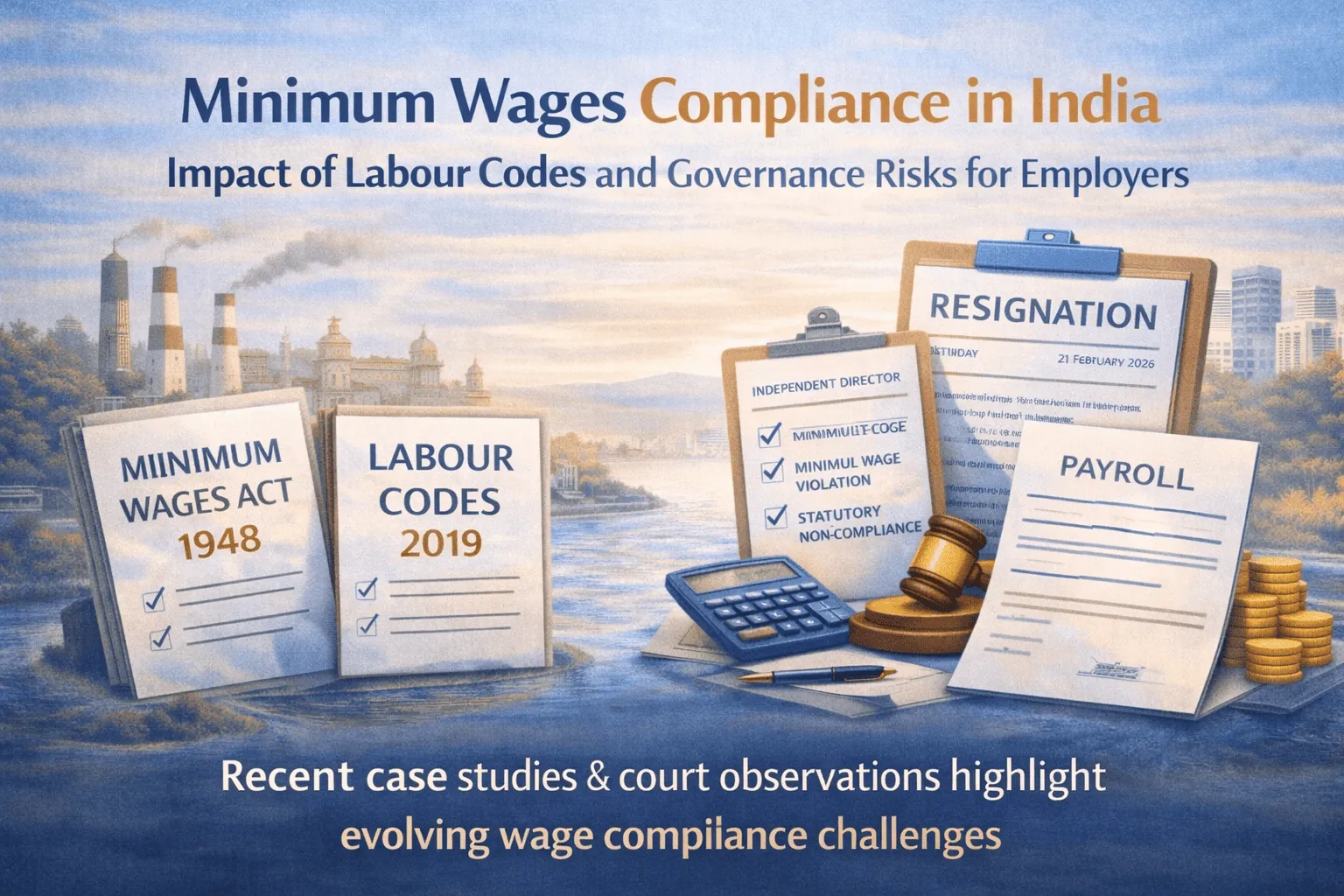
Minimum Wages Compliance in India: Impact of Labour Codes and Governance Risks for Employers
Understand minimum wages compliance in India under the Code on Wages, 2019 and the evolving legal framework. Explore recent governance concerns, court observations, payroll risks, and compliance strategies for organisations across sectors.
Original publication: 2026-02-24
Minimum Wages Compliance | Labour Codes Advisory
Minimum Wages: Pre and Post Labour Codes – Compliance Risks and Governance Lessons
The transition from the Minimum Wages Act, 1948 to the Code on Wages, 2019 marks a significant structural shift in wage regulation across India. The introduction of a national floor wage and universal wage coverage is reshaping compliance expectations for organisations across sectors.
Compliance insight
Minimum wage compliance is no longer limited to scheduled employments. The new wage framework expands coverage across organised and unorganised sectors, increasing governance responsibility for employers.
Minimum Wages Framework: Before and After the Labour Codes
The Minimum Wages Act, 1948 mandated the fixing of minimum wages for different categories of workers based on scheduled employment and regional cost-of-living variations. Wage rates differed across states and industries.
The Code on Wages, 2019 introduces a universal approach by enabling the Central Government to define a National Floor Wage. States cannot fix wages below this threshold, ensuring broader wage protection across sectors including organised and unorganised employment.
The Code on Wages, 2019 introduces a universal approach by enabling the Central Government to define a National Floor Wage. States cannot fix wages below this threshold, ensuring broader wage protection across sectors including organised and unorganised employment.
Governance Case Insight: Independent Director Resignation Over Wage Non-Compliance
A recent corporate governance development highlighted the seriousness of wage compliance obligations when an independent director resigned citing alleged payment of wages below statutory minimum levels for factory workers.
The company disclosed the resignation through an exchange filing and confirmed initiation of an internal statutory compliance review. A Board-level sub-committee has been formed along with independent advisors to evaluate the concerns raised.
The director stated that non-payment of minimum wages constitutes a serious statutory violation under the Minimum Wages Act, 1948 and the Code on Wages, 2019, potentially attracting legal consequences including constitutional implications under Article 23.
The company disclosed the resignation through an exchange filing and confirmed initiation of an internal statutory compliance review. A Board-level sub-committee has been formed along with independent advisors to evaluate the concerns raised.
The director stated that non-payment of minimum wages constitutes a serious statutory violation under the Minimum Wages Act, 1948 and the Code on Wages, 2019, potentially attracting legal consequences including constitutional implications under Article 23.
The resignation also referenced concerns regarding compliance certification responsibilities and repeated internal objections raised during Board and Audit Committee meetings.
Recurring Compliance Concerns Across Sectors
Several judicial and policy developments over the years highlight persistent gaps in minimum wage compliance across industries and employment categories.
The Bombay High Court reaffirmed that financial constraints cannot be cited by employers to avoid statutory wage obligations and directed payment of revised wages and arrears.
Reports from multiple states have indicated delays or gaps in wage payments across categories such as healthcare support workers, sanitation staff and auxiliary workforce segments.
Judicial proceedings in manufacturing sector wage disputes have highlighted concerns regarding wage revision processes and consultation transparency.
Courts have also clarified that unauthorised wage deductions not permitted under statutory definitions are unlawful and must be refunded to employees.
National employment data reports have indicated that a large proportion of casual workers continue to receive wages below prescribed statutory rates.
The rapid growth of digital and platform-based work models has further raised concerns around wage protection in emerging employment structures.
Reports from multiple states have indicated delays or gaps in wage payments across categories such as healthcare support workers, sanitation staff and auxiliary workforce segments.
Judicial proceedings in manufacturing sector wage disputes have highlighted concerns regarding wage revision processes and consultation transparency.
Courts have also clarified that unauthorised wage deductions not permitted under statutory definitions are unlawful and must be refunded to employees.
National employment data reports have indicated that a large proportion of casual workers continue to receive wages below prescribed statutory rates.
The rapid growth of digital and platform-based work models has further raised concerns around wage protection in emerging employment structures.
Domestic Workers and Minimum Wage Protection – Policy Developments
The Supreme Court recently urged State Governments to evolve mechanisms to consider minimum wage protection for domestic workers while hearing a Public Interest Litigation related to coverage under wage laws.
While acknowledging the challenges faced by domestic workers, the Court observed that legislative amendments fall within the policy domain of the Centre and State Governments.
While acknowledging the challenges faced by domestic workers, the Court observed that legislative amendments fall within the policy domain of the Centre and State Governments.
Practical Compliance Perspective for Employers
The evolving wage framework under the new Labour Codes highlights the importance of structured payroll governance, documentation discipline, and periodic statutory reviews.
Organisations must ensure alignment with notified wage rates, classification structures, and audit-level compliance validation to mitigate regulatory and reputational risks.
Organisations must ensure alignment with notified wage rates, classification structures, and audit-level compliance validation to mitigate regulatory and reputational risks.
Need support for Minimum Wage and Payroll Compliance?
Connect with Karma Management for Minimum Wages compliance, payroll management, labour laws advisory, staffing, training, RERA and governance frameworks tailored for your establishment.
Write to: marketing@karmamgmt.com
Note: This content is for general awareness purposes and should be read along with applicable notifications, statutory provisions and judicial developments.